Reducing the Risk of Embers Igniting our Homes and Neighborhoods
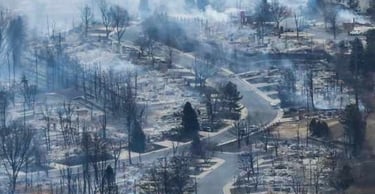
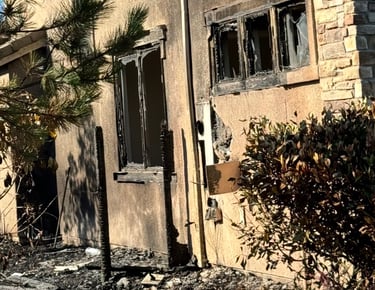
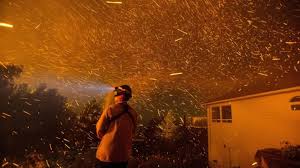
Wildfires often spread through neighborhoods when wind-driven embers ignite the first home, and the fire moves from house to house.
This site shares lessons from wildfire damage assessments and laboratory testing to help Serrano residents understand the risk—and the steps we can take together to make our community more wildfire resilient.
UPDATE: Wildfire Risk Focus Shifts to House-to-House Fire Spread in Serrano
The fire department's focus in Serrano and other high density developments is increasingly shifting from individual home ignitions to house-to-house fire spread because of the density of our villages and proximity to open space slopes.
At the same time, insurance companies are raising rates based largely on where we live and their overall wildfire loss models, rather than on the mitigation work individual homeowners have completed on their properties.
The trend suggests that, in the future, insurers may place greater value on neighborhood-wide mitigation efforts and offer better pricing or discounts in communities where wildfire risk reduction measures have been implemented consistently across most or all homes.
Risks, Strengths, and Vulnerabilities
Drought conditions
High winds
Proximity to open space slopes
Structure separation
Connecting fuels (wood fences, vegetation, combustible materials )
Wildfire Risk Factors
Structural Strengths
Fire rated roofs
Stucco or stone siding
Dual pane windows
6 inch base wall vertical clearance
Structural Vulnerabilities
Exposed eaves: Exposed wood rafters and roof decking can ignite relatively quickly under sustained heat exposure, considered a leading cause of home ignitions in wildfires
Old style foundation, eave, gable, and roof vent mesh: 1/4 inch mesh openings are large enough for windblown embers to enter the home.
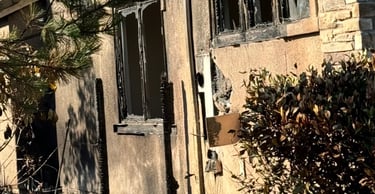
Vinyl window frames: Vinyl window frames soften, deform, and fail at relatively low temperatures compared to other window frame materials, potentially allowing flames and embers to enter the home.
Window glazing: Window panes are one of the most vulnerable parts of a home during a wildfire because they can transmit radiant heat into the home, potentially igniting nearby curtains and furnishings, and they can fail from radiant heat, direct flame contact, or ember exposure, allowing fire to enter the structure.
Attached Deck: A deck made of combustible materials, especially one with accumulated debris underneath, can ignite from embers, direct flames, or radiant heat and then transfer fire directly to the home.
Landscape Vulnerabilities
Bark mulch: It ignites easily from embers and can carry fire directly to the home, fences, vegetations and other combustible materials.
Shrubs adjacent to the house: They can ignite from embers or flames and then expose the windows and eaves to direct flame contact and intense radiant heat.
Yard Vulnerabilities
Attached wood fences and gates: They can act like a fuse, carrying fire directly from the yard to the home.
Combustible sheds: They can ignite easily and then expose the home to direct flames, radiant heat, and ember showers.
Continuous vegetation along side yards: A fuel pathway from the yard to the house.
Block Vulnerabilities
Streetscape wood fencing: Wind-blown embers that accumulate along streetscapes can ignite wood fencing that becomes a continuous fire path to homes throughout the block.
Connecting Wood Fences: Ignited fences on a block can carry fire to houses on the block.
Side yard fuels: They create a narrow, continuous pathways that allow fire to spread directly between neighboring homes.
FIRE SAFE SERRANO TEAM
Working with our partners, we are a nonprofit team of Serrano volunteers helping residents reduce wildfire risk through home and block assessments, practical education, and community events. We also pursue grant funding for risk-reduction projects and, in partnership with the HOA, manage our annual Firewise USA® recognition.
ASSESSMENT
HOME IGNITION
BLOCK FIRE SPREAD